
Ask anyone who has just finished a bathroom what took them longest to decide, and it is rarely the bath or the basin. It is the taps or more precisely, the finish on them.
We see it every week. A customer arrives set on matt black, then hesitates when they hear how it behaves in a hard water area. Another falls for brushed brass online and worries it will date. Both are fair concerns, and both are easier to settle once you understand what these finishes actually are and how they hold up in a real British bathroom.
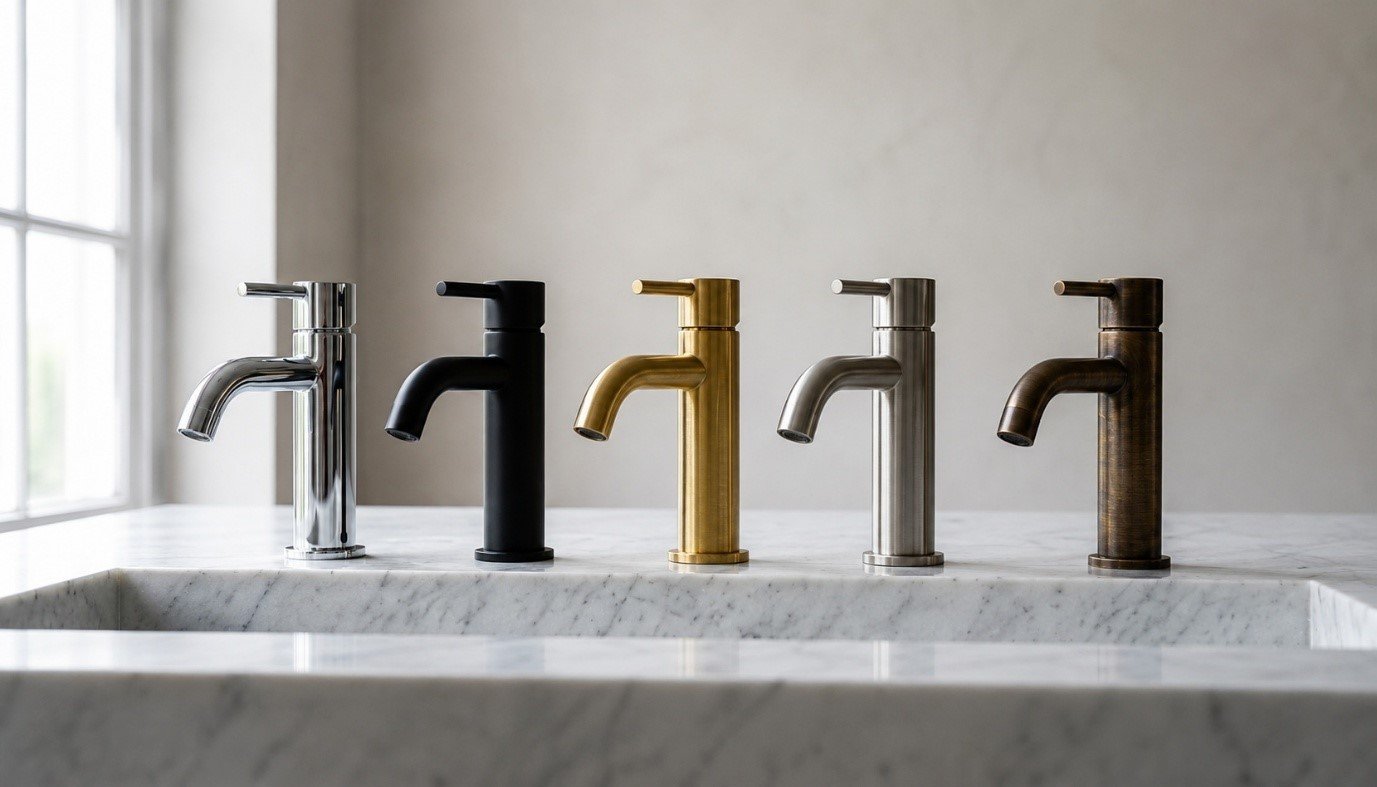
This guide covers every bathroom tap finish worth considering in 2026 chrome, matt black, brushed brass, gold, nickel, bronze and traditional styles along with the two practical checks that decide whether a tap will work in your home: your water pressure and your water hardness. You can browse the full range of bathroom taps as you read.
What counts as bathroom brassware?
Brassware is the trade term for the metal fittings that carry water in a bathroom: taps, mixers, shower valves, wastes and the fittings that join them. If your fitter asks whether you have chosen your bathroom brassware yet, they mean your taps and shower fittings not the furniture or the sanitaryware.
The name is not marketing. The bodies of quality taps are still cast or machined from brass, then plated, coated or brushed in whatever colour you have chosen. That distinction matters. The brass underneath gives a tap its weight and its working life; the finish on top is what you see, touch and clean every day, and it is the part most likely to disappoint if it has been done cheaply.
So when two taps look almost identical online and one costs three times the other, you are usually looking at a difference in finish quality and cartridge quality, not shape. Our brassware buying guide covers the construction side in more detail.
Types of bathroom taps
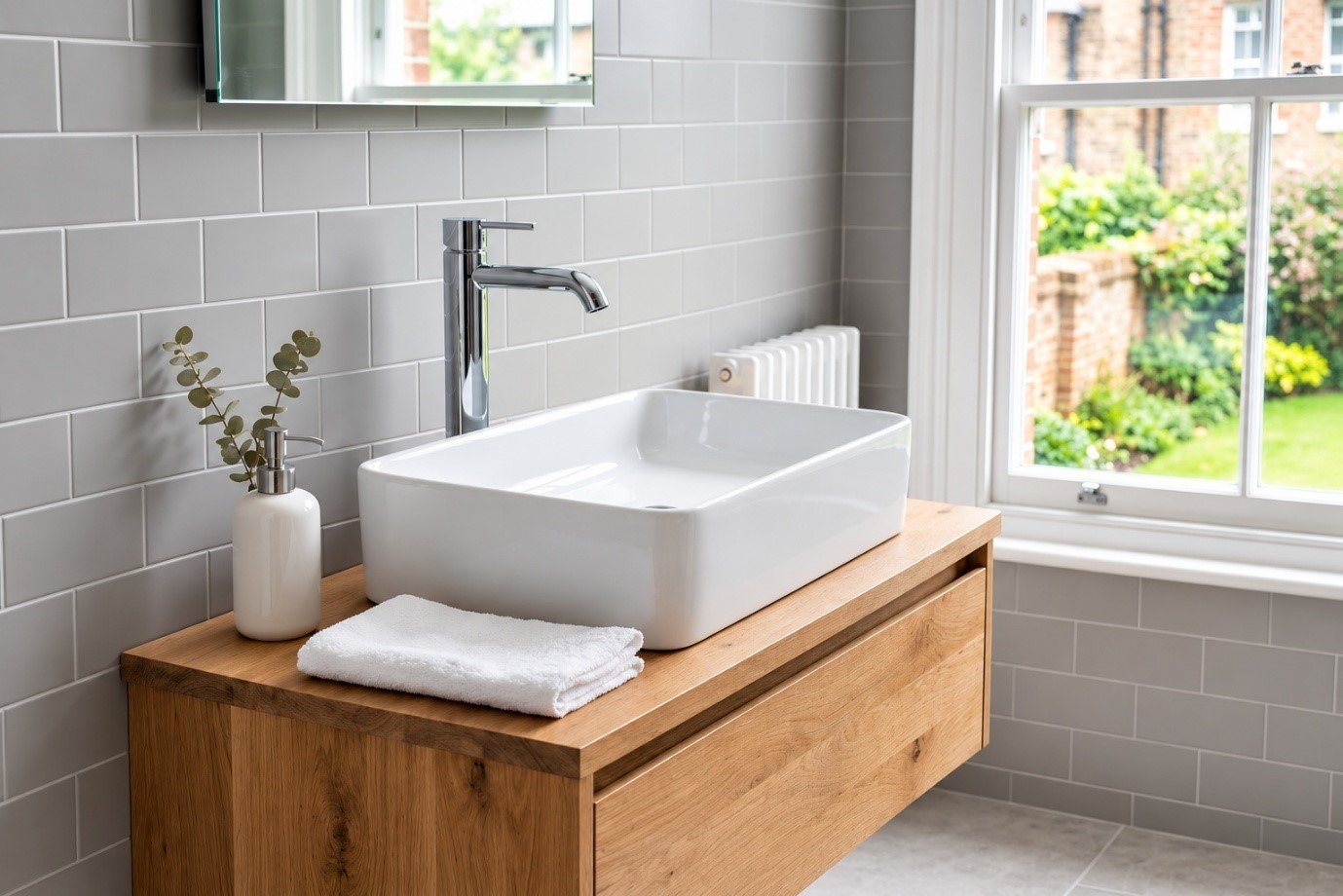
Before finish comes format. Bathroom mixer taps dominate the market now, but the right type depends on your basin, your bath and how the plumbing behind them is arranged.
Basin and sink taps
Most basins today take a mono basin mixer: one tap, one lever, one tap hole, mixing hot and cold before the water reaches the spout. Basin mixer taps are the default for good reason — simple to use, simple to fit. Bathroom sink taps in the older style, with separate hot and cold pillar taps, still suit traditional basins and cloakrooms. Three-hole bathroom basin taps give you a spout with two separate handles for a more classic arrangement. Count the tap holes in your basin before you commit: that number decides what will physically fit.
Bath taps and fillers
Bath taps are sized for flow, not just looks. A slim basin spout will take an age to fill a 1700mm bath, which is why bath filler taps have a wider bore. Bathroom bath mixer taps that also feed a shower handset are a different fitting again for those, look at bath shower mixer taps rather than a plain filler.
Wall mounted bathroom taps
Wall mounted bathroom taps give the cleanest look available and the easiest basin to wipe around, because nothing sits on the ceramic. The catch is timing. The valve body is buried in the wall, so wall mounted basin taps have to be decided before the wall is tiled, and ideally before it is boarded. Retrofitting is possible, but it means opening the wall again.
Waterfall bathroom taps
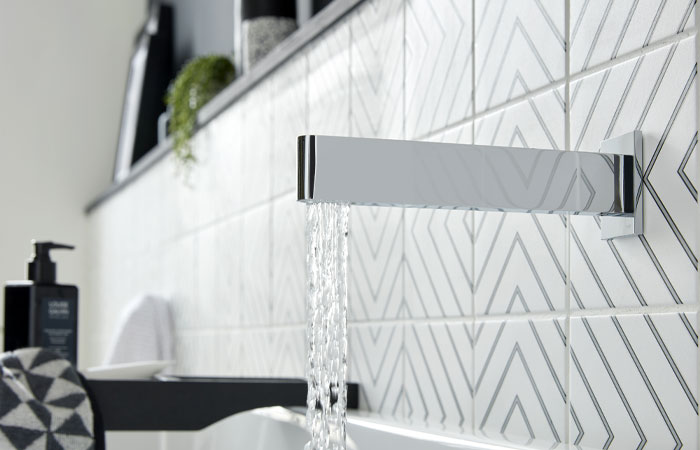
Waterfall bathroom taps have an open, flat spout so the water falls in a sheet rather than a stream. They look superb and they are unforgiving of low pressure the effect only holds together with reasonable flow behind it, which brings us to the checks below.
Bathroom tap finishes explained
Every finish below is available in the UK today. None of them is wrong; they simply behave differently once they are installed and being used twice a day.
Chrome
Chrome taps remain the most specified finish in Britain, and not only through habit. Chrome is hard-wearing, every manufacturer makes it, and spares are still easy to find years after purchase. It also disguises water spotting better than the darker and matt finishes, which counts for more than people expect in a hard water area. If you are fitting a rental, a busy family bathroom, or you would simply rather not think about it again, chrome is the sensible answer.
Matt black
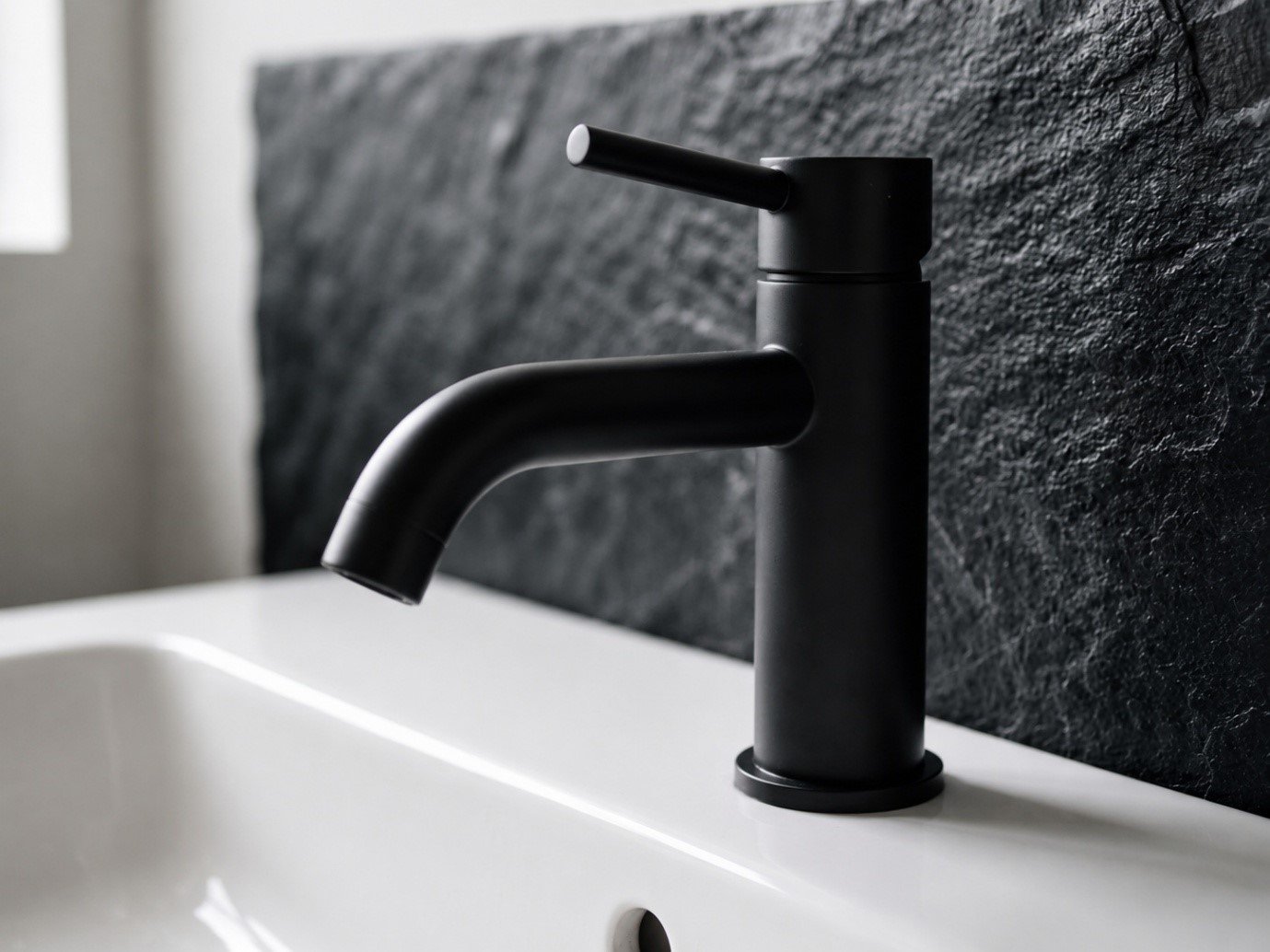
Black bathroom taps have moved from statement to mainstream in the past few years, and they look excellent against white ceramic, stone and timber. Two honest warnings. Matt black taps show limescale and water marks more clearly than any other finish, so in a hard water area they need drying after use to stay looking new. And never take a descaler, bleach or a cream cleaner to them matt finishes are coated, and those products strip the coating permanently. If you will wipe them dry, they are a fine choice. If you know you will not, take a brushed finish instead.
Brushed brass
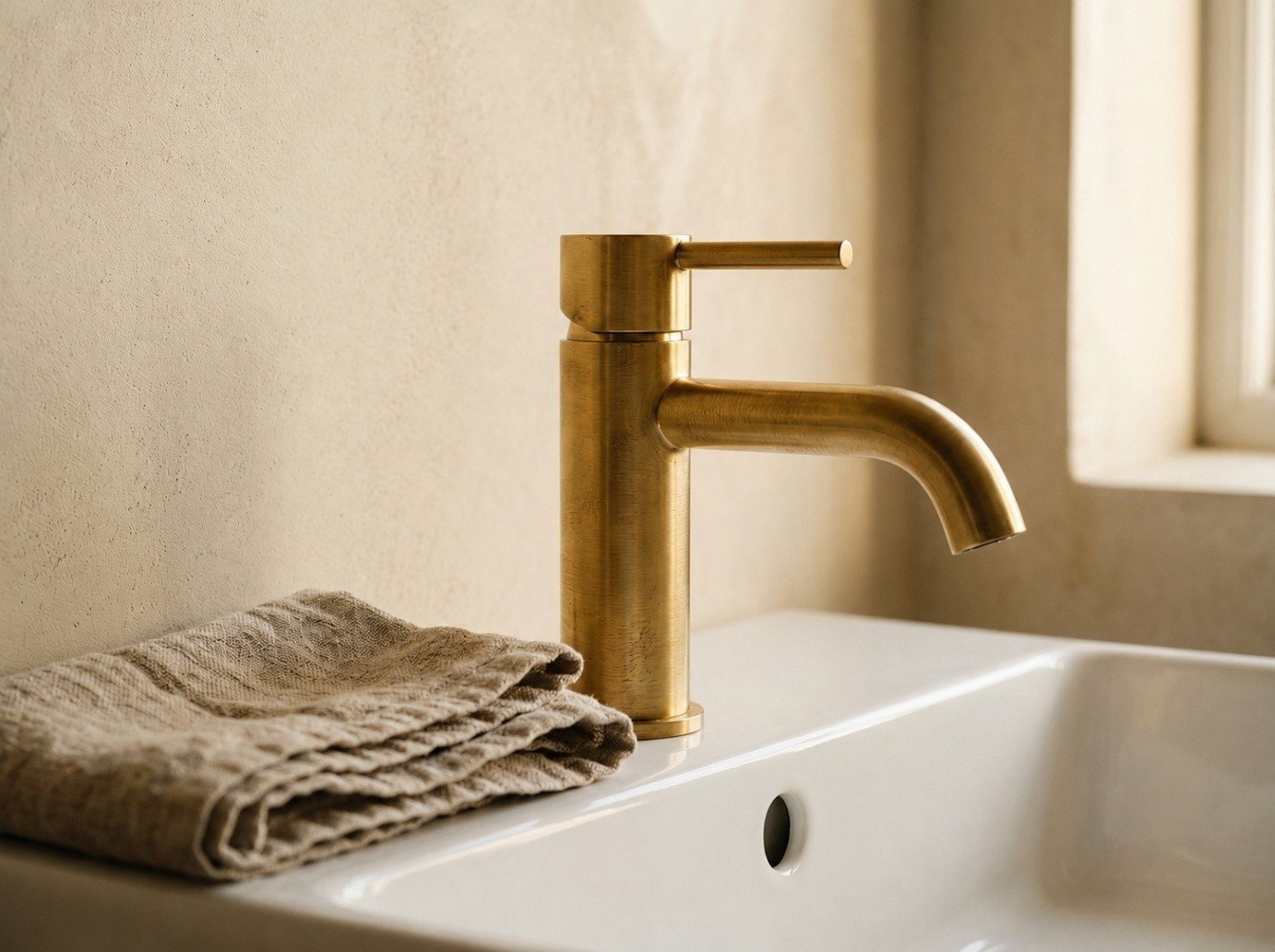
Brushed brass taps have been the standout finish of recent years, and this is one trend with substance behind it. The warm tone sits well with white, grey, green and wood, and the brushed texture disguises fingerprints and water marks far better than anything polished. Of all the coloured options, brushed brass bathroom taps are the most forgiving to live with day to day.
You will also see brass bathroom taps sold as unlacquered, aged or antique brass bathroom taps. These are a different proposition: they are designed to patinate, darkening and mellowing with use rather than staying uniform. Some people love that character; others are alarmed the first time it happens. Ask which you are buying, because the two age in opposite directions.
Gold
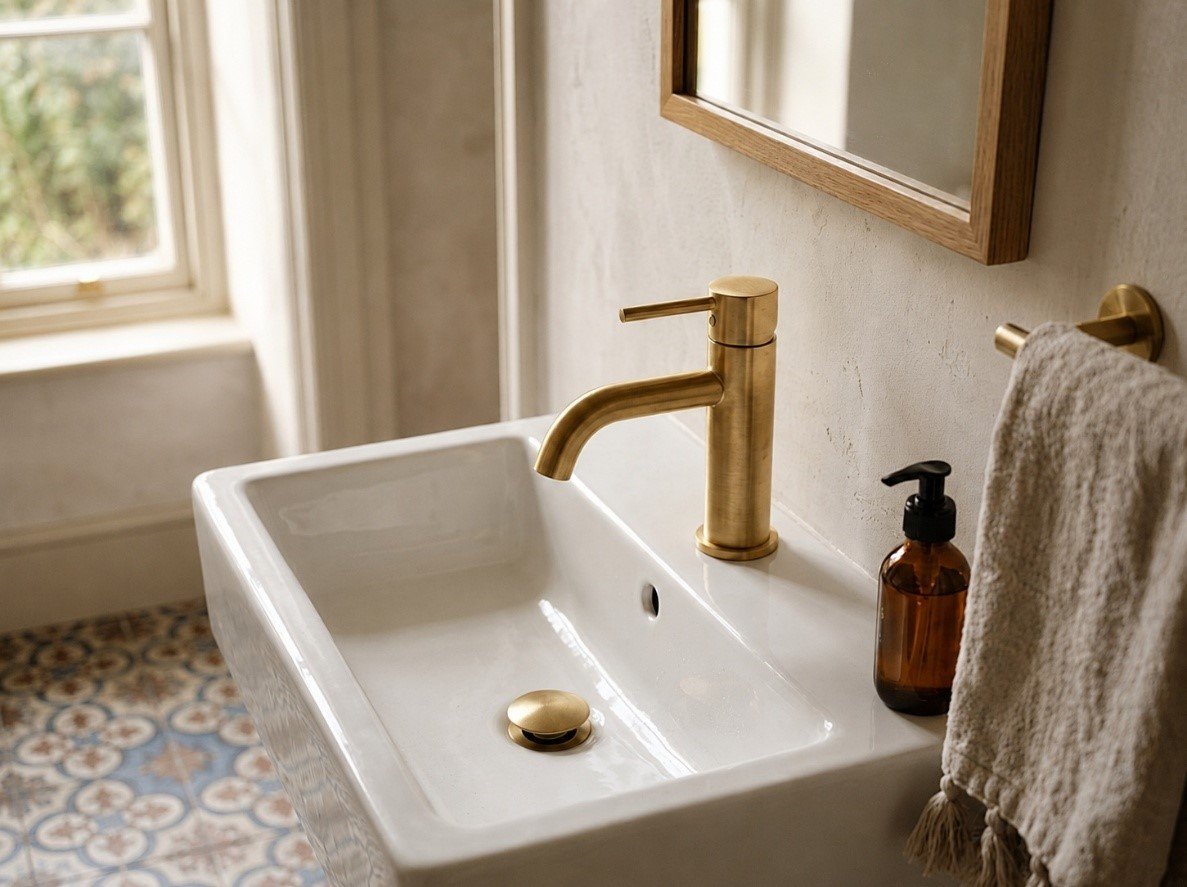
Gold bathroom taps divide opinion, and the version you choose decides which side you land on. Polished gold is bright and reflective, and it shows every fingerprint handsome in a guest cloakroom that sees light use, harder work in a family bathroom. Brushed gold taps are the more practical option: the same warmth without the mirror surface. Whichever you pick, gold taps bathroom schemes work best when the finish is repeated elsewhere the waste, the shower fittings, a mirror frame rather than appearing once and looking accidental.
Brushed nickel
Brushed nickel taps sit between chrome and the warmer metals: a soft, slightly grey finish without chrome’s brightness. It is understated, hides marks well, and works in both modern and classic rooms. If chrome feels too clinical and brass too bold, this is usually where people land.
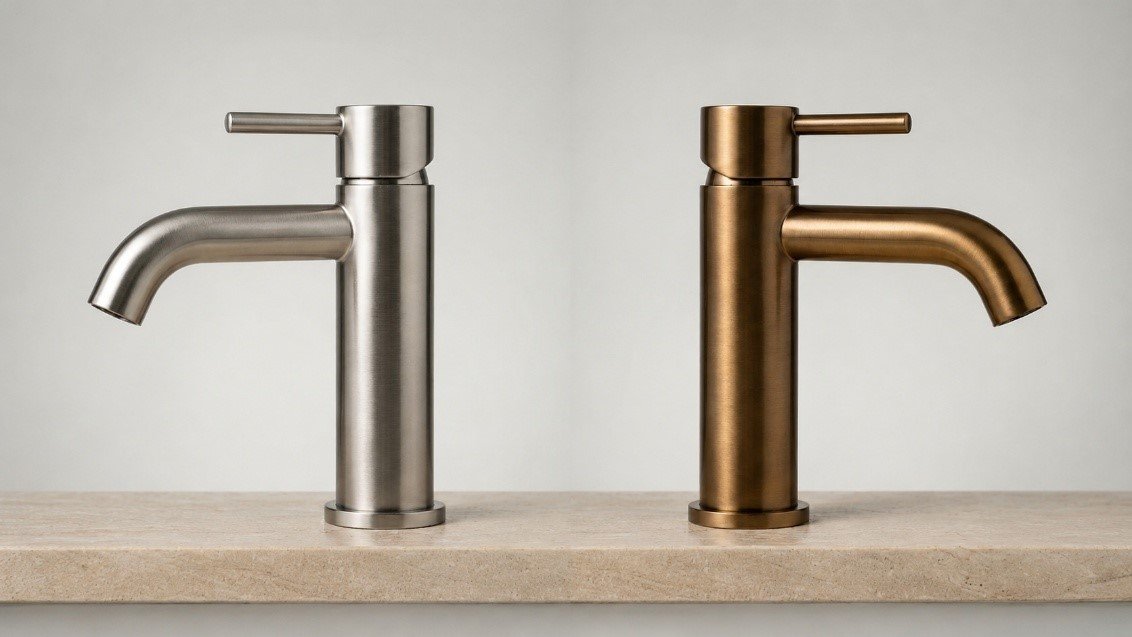
Brushed bronze
They come into their own alongside natural materials stone worktops, timber vanity units, textured tiles. It is a committed look rather than a safe one; a single bronze tap in an otherwise chrome bathroom will read as a mistake.
Traditional finishes
Traditional bathroom taps are defined as much by shape as by colour: crossheads or levers, white porcelain hot and cold indices, and a heavier, more architectural body. They suit Victorian and Edwardian houses, and they are often the correct choice in a period property where a minimalist mono mixer would jar. Chrome, nickel and brass all work it is the detailing that makes them read as traditional.
A word on PVD
You will see PVD mentioned against coloured finishes. Physical vapour deposition bonds the colour to the tap rather than plating it onto the surface, which gives far better resistance to scratching and tarnishing. It is the reason PVD coating taps in black, brass and gold now last, where cheaper coloured taps once wore through at the handles.
Choosing the right tap: pressure, water and style
Water pressure
If your home has a gravity-fed system a cold tank in the loft and a hot water cylinder your pressure depends on how far the tap sits below that tank. As a rule of thumb, every metre of drop gives roughly 0.1 bar. An upstairs basin about two metres below the tank therefore receives around 0.2 bar, which is genuinely low. Most standard taps expect somewhere between 0.3 and 1 bar to perform properly, so on a gravity system you need taps specifically rated for low pressure, typically 0.1 to 0.5 bar. Combi boilers and unvented cylinders deliver mains pressure and will run almost anything.
This is also why waterfall spouts disappoint on gravity systems: with little pressure behind it, the sheet of water simply breaks up.
Water hardness
Much of the south and east of England is hard water country, and limescale is what ruins finishes. It shows fastest on matt and polished surfaces and slowest on brushed ones. If you live in a hard water area and you have set your heart on matt black or polished gold, accept that a wipe with a dry cloth is part of the arrangement.
Matching the scheme
Try to carry one finish through the room taps, waste, shower valve, towel rail. Be aware that finishes vary between manufacturers: one brand’s brushed brass is not another’s, and comparing them on a screen is unreliable. Where you can, buy the tap and its waste together.
Finally, check the tap is WRAS approved. Any fitting carrying water from the mains must comply with Regulation 4 of the Water Supply (Water Fittings) Regulations. That is a legal requirement in the UK, not a manufacturer’s badge.
Brands worth knowing
Two names come up repeatedly in British bathrooms, for different reasons.
Vado is a Somerset manufacturer with a range spanning minimalist mixers to traditional collections, and its Individual range offers matching finishes across brushed nickel, black, bronze and gold. Most Vado taps carry a 15-year guarantee, and the part buyers overlook cartridges and spares remain available, so a drip in eight years’ time is a repair rather than a replacement.
Booth & Co is the traditional specialist: lever and crosshead designs with white porcelain indices and English styling, made for period bathrooms where a modern mixer would look out of place.
When comparing brands, guarantee length and spares availability tell you more about long-term quality than the product photography does.
Looking after your brassware
Finishes fail through cleaning far more often than through use.
Wipe taps with a soft, damp cloth and dry them afterwards. That one habit does more for a finish than any product on the shelf. Avoid limescale removers, bleach and cream or powder cleaners on brushed, matt and PVD finishes they strip coatings, and the damage cannot be undone. Where limescale has built up on chrome, a cloth soaked in warm water and left over the area for a few minutes will soften it without scouring.
When something does go wrong, it is usually mendable. A tap dripping from the spout normally needs a new cartridge or washer rather than a new tap. On a modern mixer, fixing a leaking tap is generally a mixer tap cartridge replacement, which takes minutes once the water is isolated. On older taps with separate hot and cold handles, changing a tap washer is a similar job. If you are unsure how to stop a dripping mixer tap, the brand and model number will identify the right part most are still available through tap spares.
Frequently asked questions
Which tap finish is best for hard water?
Brushed finishes brushed brass, brushed nickel and brushed bronze hide limescale and water marks best, with chrome close behind. Matt black and polished gold show marks fastest and need drying after use.
Do matt black taps scratch or fade?
A quality matt black tap uses a PVD or powder-coated finish that stands up well to normal use. They fail through abrasive cleaners and descalers, not through ordinary wear.
Can I mix finishes in one bathroom?
Yes, but keep it to two and repeat each at least twice brushed brass taps with black shower fittings, echoed in the mirror frame and towel rail, for instance. A finish used only once looks like an error rather than a decision.
What water pressure do I need for a mixer tap?
Most standard mixers want 0.3 to 1 bar. On a gravity-fed system, expect roughly 0.2 bar at an upstairs basin and choose taps rated for 0.1 to 0.5 bar.
How many tap holes does my basin need?
Count them before ordering. One hole takes a mono mixer, two takes pillar taps, three takes a spout with separate handles. Our bathroom tap buying guide walks through sizing in more detail.
Choosing with confidence
The taps you fit will be in front of you every morning for the next decade, so it is worth a few minutes’ thought about how a finish behaves, not only how it photographs. Get the pressure right, be honest with yourself about how much wiping you will actually do, and then choose the finish you genuinely like. Browse the full range ofbathroom taps, or if you would rather talk it through, call us on 0114 322 5787.